
Environment Programs: Water Conservation, Biodiversity Management, Solar Power and Sanitation & Hygiene
The Need
In 2003, women in rural areas of Gurugram district, Haryana, faced the burden of fetching water from distant sources. This highlighted a crucial realization—women’s empowerment could not be addressed in isolation, as water scarcity directly impacted their lives. However, mismanagement of water resources by local communities led to a steady decline in groundwater levels.
To combat this, Navjyoti India Foundation constructed water conservation structures in Abheypur village, which were later expanded to neighboring areas. Despite these efforts, the situation has worsened over time, with groundwater levels dropping by 2–5 meters annually. According to the Central Ground Water Board (CGWB), out of 107 development blocks in the region, 88 are over-exploited, 10 are critical, and 9 are semi-critical—underscoring the urgent need for sustainable water management.
Our Solution & History
In 2001, Navjyoti India Foundation began its environmental interventions by convening a meeting with the governing councils of 35 villages in Sohna Block to tackle the escalating water crisis. This dialogue led to the launch of the Abheypur watershed project, where we empowered villagers through water literacy training and encouraged their active participation through in-kind contributions, labor, and supervision.
To further strengthen water conservation efforts, we constructed rainwater harvesting structures in seven government schools. This not only helped replenish groundwater but also instilled a culture of conservation among the younger generation. Today, despite below-average monsoons, these initiatives enable the percolation of over 50,000 kilolitres of water annually. The success of these projects has driven us to expand our reach, addressing the region’s growing water crisis and fostering long-term sustainability.
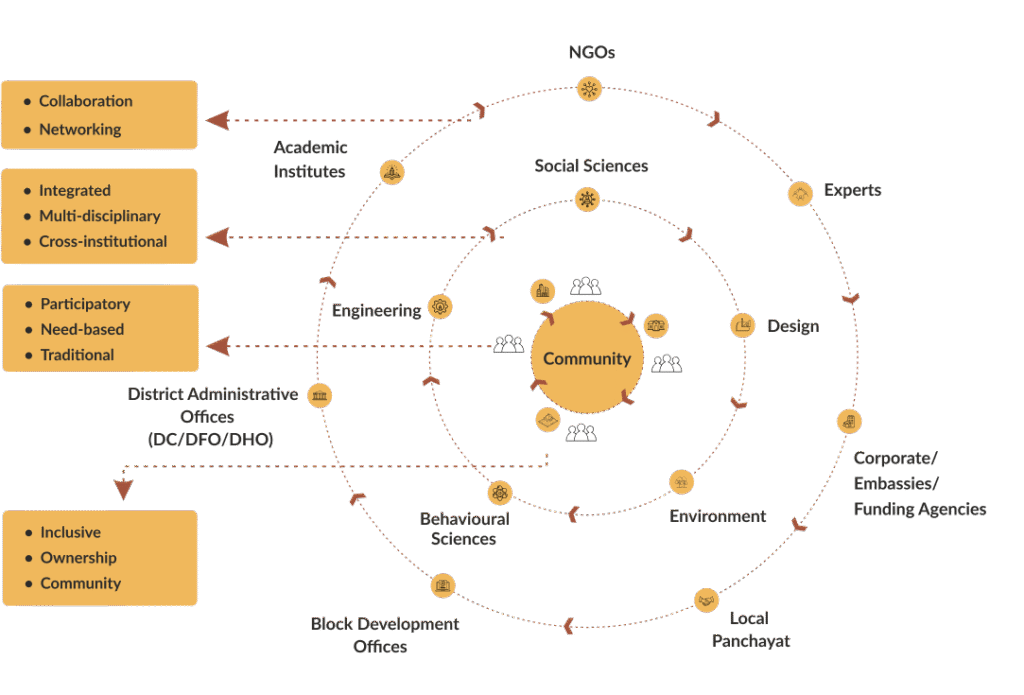
Model of our Approach
Our model approach addresses global social and economic changes through collaborative, integrated, and inclusive eco-restoration with stakeholders, fostering behavioral change in water management and community ownership.
Our Interventions & Impact
1
Water Conservation & Management
Navjyoti India Foundation is committed to addressing water scarcity through a combination of infrastructure development, community engagement, and education.
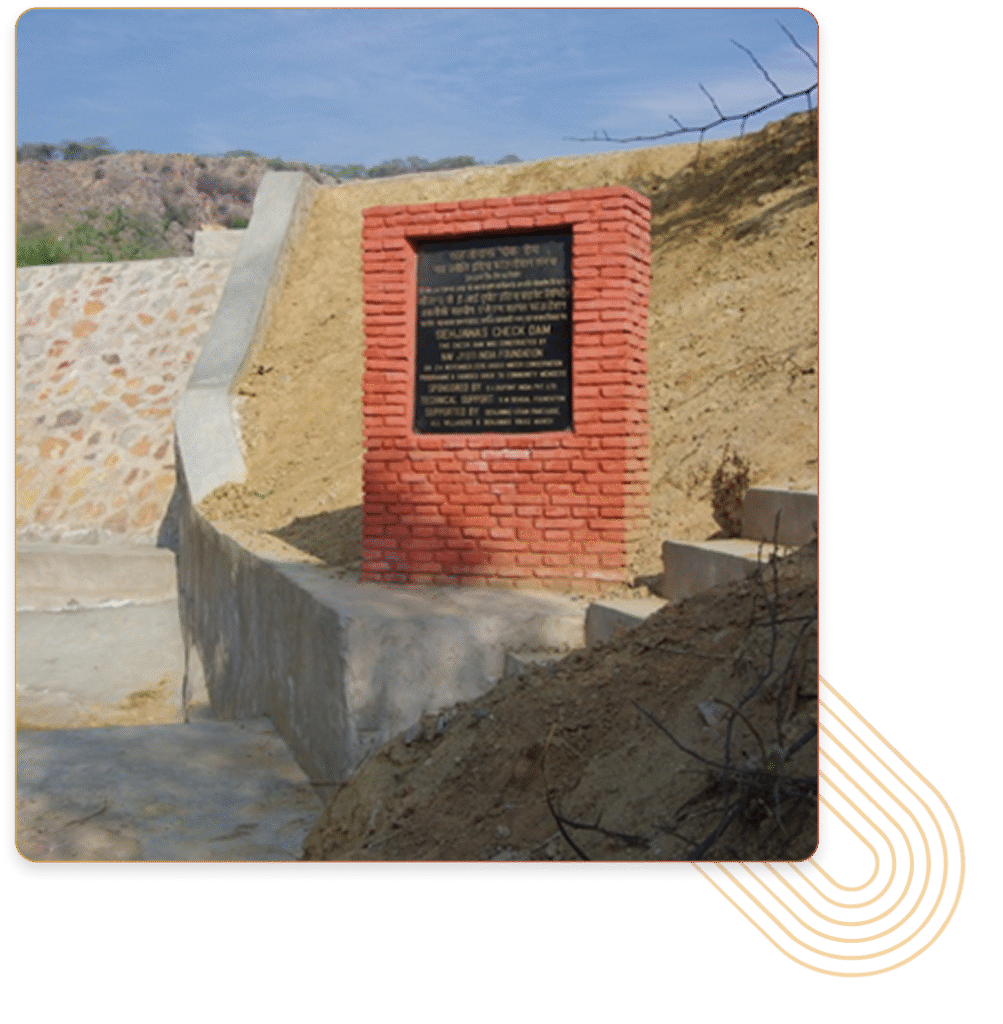
- Watershed Development: We have constructed 3 check dams, 4 gabion structures, and 21 gully plugs across three villages, significantly improving groundwater recharge.
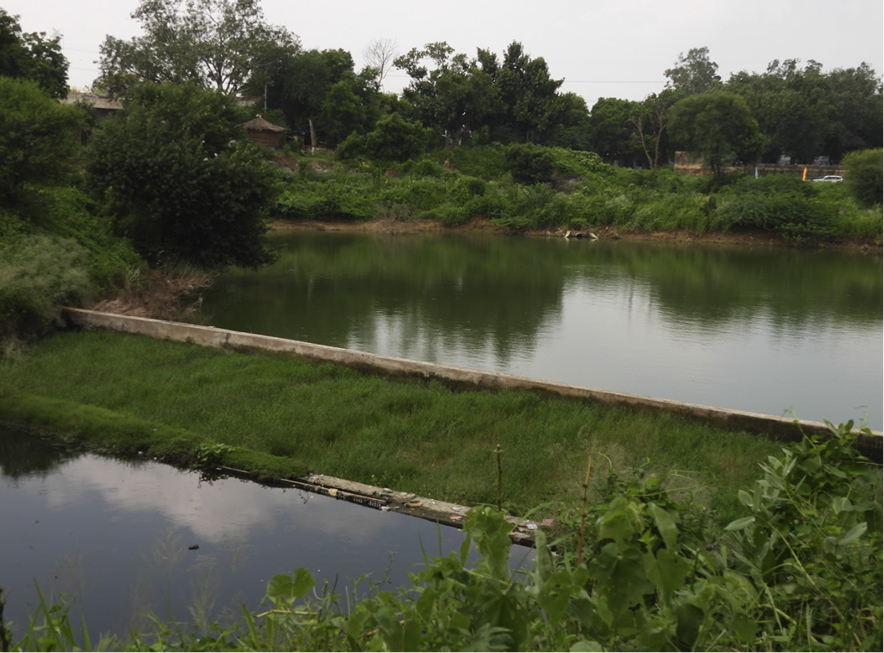
- Pond Revival: Using nature-based solutions, we have successfully revived a pond, benefiting both the community and local biodiversity.
- Recharge Wells & Filtration: We have built 83 recharge wells and 84 recharge filters in 12 government schools and 45 police stations across Gurugram, Sonipat and Faridabad, ensuring sustainable water replenishment.
In 2023, we further strengthened our advocacy efforts by organizing the “Be the Change: Women for Water” regional workshop in Haryana, bringing together participants from seven states to drive collective action for water conservation.

2
WaSH (Water, Sanitation, and Hygiene) for Vulnerable Communities
- WaSH in Schools: We have provided WaSH training in 12 schools and constructed a hygienic and safe toilet facility in one school.
- Community Infrastructure: A safe drinking water facility was installed using biosand filters, ultrafiltration (UF), and ultraviolet (UV) technology, ensuring access to clean drinking water. Additionally, a toilet facility was constructed at the Mahila Chaupal, promoting better sanitation.
- WaSH as an Enterprise:
- Women and a potter’s family have established Jalkalp (bio-sand filters) and Matikalp (clay filters) to promote clean drinking water solutions.
- Training programs have been provided for plumbers, equipping them with skills to generate income.
3
Solid Waste Management & Entrepreneurship
We empower communities to transform waste into valuable resources:
- Entrepreneurship Training: We conduct training programs on solid waste management, equipping individuals with the skills to start their own businesses.
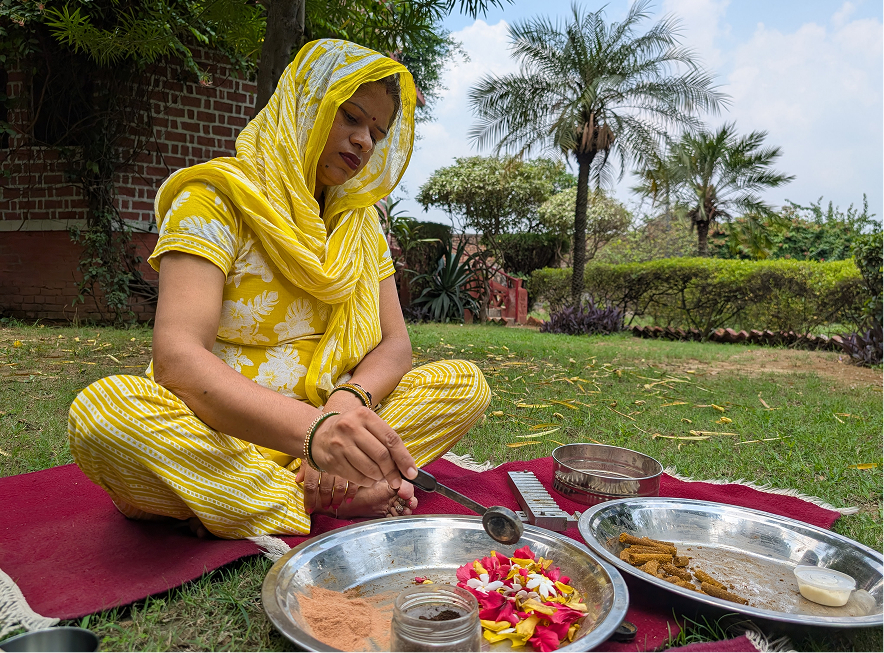
- Upcycling Initiatives: Many women have begun producing Dhoop (incense) from dried flowers, contributing to both waste reduction and sustainable livelihoods.
4
Biodiversity & Green Initiatives
- Developing Green Spaces: Our efforts to combat deforestation and biodiversity loss began with the Rural Management and Training Institute (RMTI), where we transformed the campus through organic farming and extensive plantation. This initiative has expanded to nearby villages, creating thriving ecosystems.
- Pond Rejuvenation: We have revived two ponds and restored green spaces around them, contributing to improved biodiversity and environmental restoration.

5
Renewable Energy & Sustainability
- Energy Park: We established an Energy Park to showcase sustainable energy solutions and raise awareness about renewable energy.
- School Solutions: A solar power system was implemented in a school to serve as a model for renewable energy use.
- Our Campus: A solar power plant was installed at RMTI to support training programs, reduce costs, and promote clean energy practices.

Our Ongoing Commitment
By combining infrastructure development, education, and community engagement, we continue to advance sustainable water management, sanitation, waste management, biodiversity conservation, and renewable energy solutions. Our holistic approach ensures lasting environmental impact and resilience for the communities we serve.
Our Impact
Total annual ground water recharge Potential created (Litres)
Total population benefited through water program
Total Sq. m of barren land converted into green space
Total Sq. m of land saved from flooding
Total Number of sessions
Total number of Community Members Trained
Total water conservation structures constructed
Total number of people impacted through solar power initiatives
Total number of Community Members Trained = 5,370 ( 4,762 students in 129 schools, 92 Teachers, 89 Panchayat Members and 427 RWAs, Corporate Executives and Government officials)
Working Towards the Sustainable Development Goals (SDGs)
SDG3: Good health and well-being
Good health and well-being: Our WASH programs promote healthy and hygienic conditions for communities to thrive
SDG 6: Clean Water and Sanitation:
Clean water and Sanitation: Our water conservation programs provide access to clean and safe water to communities in rural, urban and peri-urban areas
SDG 15: Life on Land
Life on Land: Our biodiversity and green space initiatives work towards restoring the natural land ecosystem and promoting plant life.